Forestry and Wood Industry
Forestry and timber industry workers are involved in forest management and stockpiling, furniture, paper and wood products, wood processing and wood house building. Forestry and ti...
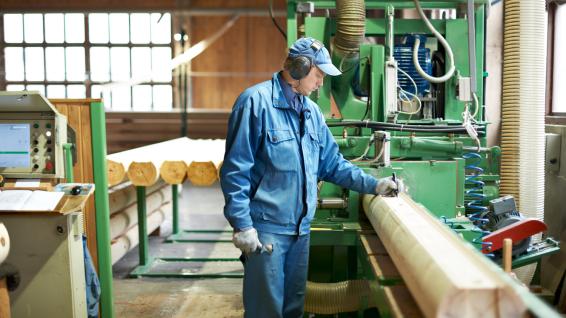
Future work in forestry and timber industry is influenced by technology development and innovation. In forestry, digitalisation is a key trend in terms of forest monitoring, management and certification, as well as mapping forest resources and services, modelling forest ecosystems and forest decision-making. In the timber industry, the need for development activities increases primarily in the areas of data processing, energy saving, measurement technologies, and chemical valorization of wood. In wooden house building, house production in factories is increasing.
2031. for the year, the number of jobs in forestry and timber industry is increasing. This is especially the case in occupations that require higher education, such as production managers, wooden house building managers, engineers. The number of forest machinery operators and skilled forestry workers is also increasing, due to the increasing reforestation by forest planting and the projected increase in maintenance cutting.
In the future, the number of employees will remain the same for forestry managers and top specialists, mid-level forestry specialists, timber truck drivers, timber industry managers, joinery, wood industry skilled workers and bench and line operators. in the course of 10 years, nearly 1,500 graduates of forestry and timber industry specialties will be needed, as there will be more jobs in the future than workers with suitable education. Graduates are needed in the following professions: manufacturing manager, manufacturing equipment technician, bench and line operator, woodhouse builder, woodhouse construction manager, forestry skilled worker, forest machinery operator.In addition, entrepreneurs are missing engineers and technician-drawners who specialize in woodhouse construction or wood chemistry.
In order to remain competitive in the global market, Estonia needs to start valuing wood higher and therefore increasingly needs specialists with industrial bioprocess technology and engineering knowledge as well as operators with knowledge of the specifics of biochemical processes.
Information is based on the OSKA Forestry and Wood Industry Workforce and Skills Survey, where employment in the field was forecast until 2031.