Agriculture and food industry
Agricultural and food industry workers are involved in animal and plant production, fishing, aquaculture, beekeeping and veterinary activities, as well as food and beverage product...
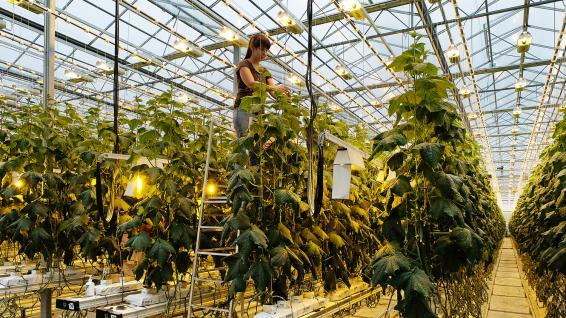
The need for labour and skills in the agricultural and food industries will be most affected in the future by population changes, technological development and innovation, the transformation of the value world and the environment and the green turnaround. The so-called new agriculture will be green and based on technology and science, the knowledge and skills of employees must be at a higher level than before.
The key words that will influence the field can be identified as biotechnology and informatics, nanotechnology, energy-saving and waste-use technologies, robotics, sensors and automation. In addition, businesses must work hard to raise consumer awareness, make their activities more transparent, environmentally conscious, human and animal-centred and reduce food waste.
2031. by the number of employees in agriculture and the food industry will decrease by 11%. At the same time, the need for labour in the field remains high, both due to the need for replacement of workers and due to the fluidity of workers.
The decline is not happening in all professions - there is a small increase in employment for vets, vets, advisers for agriculture and fisheries, and for people working as technical support for agricultural machinery and equipment.
The decrease in the food industry is mainly affecting ordinary workers and skilled workers. The number of professionals requiring food technology preparation, e.g. product development managers, quality managers and technologists, remains the same. There is a small increase in the number of technicians and mechatronics and technical managers.
Every year, more than 200 graduates of professional formal education are needed by agriculture. In the food industry, close to 180 graduates are needed each year in view of the need for substitution and the change in the number of employees. In terms of numbers, the need for operators, processors and product makers in the food industry is greatest, while for larger companies they are not trained. In particular, graduates with higher education are needed, especially for vets, professionals and agronomists trained in food technology.
The most graduates are in the professions of gardener, landscape builder and baker, confectioner and confectionery maker, but a large proportion of these graduates do not go to work in the field.
Cross-sectoral knowledge and skills that are important in the future- Multiple professional skills and broad-based sectoral knowledge
- >economic knowledge and sales, marketing and export skills
- >>Understanding in the field of business, environment and green turn, including environmentally friendly manufacturing technologies, waste use and biotechnology
- >>>>